Okay, the title is slightly exaggerated, as there aren’t 50 awards, much as I’d like there to be.
If you’ve been following my account of my reading journey around the USA, you’ll know I’ve chosen to read one book for each of the 50 states. You can read about how I worked out my list of books here.
I’ve loved the chance to re-read old friends, and the chance to find new ones. I’ve enjoyed finding out about parts of the USA I’ve known very little about, and I’ve loved the challenge of tracking down books that were more obscure than I expected.
Now it’s time to celebrate these books, and so here are the awards they each accrue, for good or ill. Drumroll, please!
Luckiest Pulitzer Prize: You can only compete against what you’re up against, and some years it’s going to be easier to win an award than others. And yet, as much as I enjoyed the humour and plotlines of Richard Russo’s Empire Falls, it doesn’t seem like a Pulitzer Prize winner. When I flick through the lists of winners, I’m not surprised to see there quite a few of my 50 books, but Empire Falls is the one I found… surprising. Good book, but not that good.
Quietest triumph: Kent Haruf’s Plainsong, representing Colorado, is a beautiful evocation of life in a small community, of lives damaged but determined to make the best of it. There are no blaring trumpets or battles to the death, just a quiet sense of the way life is lived on this planet.
Longest wait for something to happen: No doubt Fear and Loathing in Las Vegas was a game-changer in its day, but it was more tedious now. I get that the journey was the destination for Hunter S Thompson, or whatever pseudonym he gave himself here, but a journey with nothing eventful happening is not the best tale.
Best non-fiction: See also the Best Biography award, and a few other awards for non-fiction, but I’ll give this award to John Berendt’s account of his time in Savannah, Georgia, Midnight in the Garden of Good and Evil. If Hunter S Thompson had had the skill or luck to meet the people John Berendt encountered, Fear and Loathing would have been a far better book. Or maybe John Berendt just had a superior ability to write about them?
Quickest book to give away after reading: Apologies to Patricia Cornwell fans, but my Virginia book, her Body of Evidence, was the least-engaging thriller I’ve read for many years.
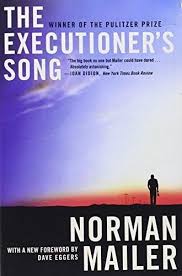
Blurriest line between truth and fiction: Norman Mailer’s Executioner’s Song is a massive 1100 page true crime account that reads like a novel. Honestly, I was 300 pages in before I realised it wasn’t a novel! That was when I turned the page to find a series of photos of a convicted murderer I had never heard of. I’m still not sure if I would have preferred to be able to keep treating it as complete fiction…
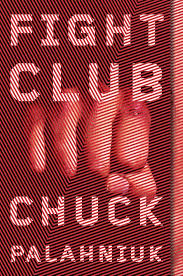
Best twist: Fight Club, by Chuck Palahniuk. I’ve never seen the film, so I’m not sure if the twist works the same way there, but it was awesome in the book. I won’t say any more about it, in case it will also be a surprise to you.
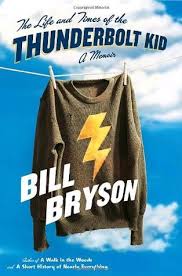
Most fun to read: Bill Bryson’s Life and Times of the Thunderbolt Kid could also have won an award for most comprehensively covering one decade (roughly) in American history, but it was such a fun way of telling it! This is one of those books that make you laugh out loud and re-read sections to others. When he starts telling about the people who wanted to be picnicking sight-seers at a nuclear test, I repeatedly lurched from incredulity to hilarity in a way I’m not sure I’ve ever done before or since.
Best classic novel (pre-20th century): Funny thing: I thought I had several pre-1900 books on my list, but when I checked, it turned out that Edith Wharton’s The Age of Innocence and Henry James’s The Ivory Tower were both written in the early 1900’s. That leaves this award clear for Mark Twain’s Adventures of Tom Sawyer. It’s still a brilliant book for kids, with a much faster pace than many pre-modern children’s books (apart from one chapter that feels as if Samuel Langhorne Clemens is satirising something now unfamiliar.) Almost as much fun to read as Bill Bryson, above.
Least satisfactory read: The aforementioned The Ivory Tower. Now, I’ve read and enjoyed a lot of Henry James’s books, but this one, representing Rhode Island, was completely unsatisfactory because he never finished it. I was getting through the book, realising there weren’t many pages left, but feeling like a lot of story still remained. I wasn’t wrong about any of that. What would have happened?
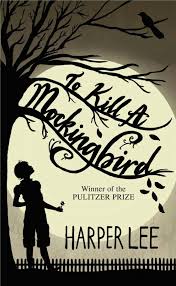
Best 20th century classic novel: This was much harder to decide! Maybe it depends on what we mean by ‘best novel’ as an argument could easily be made for any of To Kill a Mockingbird, East of Eden by John Steinbeck, and William Faulkner’s The Sound and the Fury. All see deeply into the human condition, and engross us as they do so. In the end, for its daringly experimentative style, I’m going to give this award to Faulkner. On another day, maybe I’d see it differently. What do you think?
Quickest read: Sandra Cisneros’s The House on Mango Street also wins the award for most elusive book, such were the lengths I had to go to in order to find a copy. In the end, I spent much less time reading this than hunting for it. It’s a series of short snippets capturing the author’s childhood growing up Latina in Chicago. Two hours to read, including interruptions, max. And worth your while.
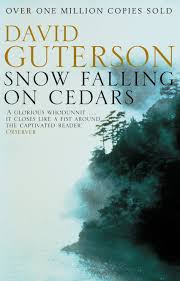
Best mystery story: I’ve already mentioned the courtroom drama of Snow Falling on Cedars, and the way that mystery unfolds and is solved is intensely satisfying. However I’m going to give this award to Louise Erdrich’s The Round House for taking me into a slice of life I was less familiar with, being set on a reservation, replete with the prejudice from the outside world and the powerlessness of those within it.
Best Native American story: Step up again, Louise Erdrich.
Best outdoors story: No doubt about this one – Jon Krakauer’s account of one man’s retreat into a life in the Alaskan wilderness, Into the Wild, is a thoroughly absorbing account of what makes this part of the world so dangerous. Narrowly pipped are Norman Maclean’s A River Runs Through It and, despite its title, Cormac McCarthy’s Cities of the Plain.
Best drama or poetry: Arthur Miller’s play about the Salem witch trials, and referencing 1950s McCarthyism, The Crucible, is a clear winner here ahead of… Ah. Ok. No runner-up award. I’ve discovered an area of literature that I’ve clearly underrepresented in my selection! Perhaps I next need to select 50 poems for 50 states…
Best short stories: The three contenders, Close Range by E Annie Proulx, The House on Mango Street by Cisneros, and Winesburg, Ohio by Sherwood Anderson, all introduced me to a time or place I was unfamiliar with, and have stayed with me since, and that’s exactly what this project was designed to do. Therefore, they’re all winners! Lovely.
Best capture of a single time and place: NASA scientist Homer H Hickam Jr’s Rocket Boys tells the story of his childhood, about the ultimately successful attempts by him and his friends to build a rocket. It also covers the coal-mining industry in its declining years, and the effects it has on the surrounding community, as well as a young teen’s struggle to be understood by his parents, by his peers, and by that perfect girl. It’s a childhood that would be difficult to replicate today (which parents allow their kids to keep rocket fuel in the house these days?) but inspiring to children of all ages. That means you.
Best biography: Homer Hickam has to take the runner-up spot here, to Maya Angelou’s I Know Why the Caged Bird Sings. Deprived of many of the advantages enjoyed by, say, Hickam or Bryson or even Cisneros, Angelou is nevertheless on an unstoppable path to greatness.
Best re-read: This award is shared. I had previously read ten of the 50 books, and was glad to go back to each of them, so this was a tightly-fought race. In the end, I’ve given it to two books: Harper Lee’s To Kill a Mockingbird, and David Guterson’s Snow Falling on Cedars. The former is justifiably a classic and it doesn’t feel fair for anything to go up against that book, but Guterson’s beautiful story (coincidentally also combining a court trial with issues of prejudice!) is such a rich place to dwell in that it climbs right up onto that top shelf.
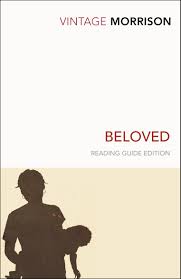
Best new read: Out of the forty books on my list that I hadn’t previously read, there are three that stand out as stunningly brilliant. Each book absolutely captivated me, each of them were wonderfully written, and perfectly controlled in their handling of character, plot and theme. How do I decide between Toni Morrison’s Beloved, John Steinbeck’s East of Eden and Donna Tartt’s The Secret History? Here’s my call: Beloved is the winner.
 Brook and the Book